Heat Risk Clinic
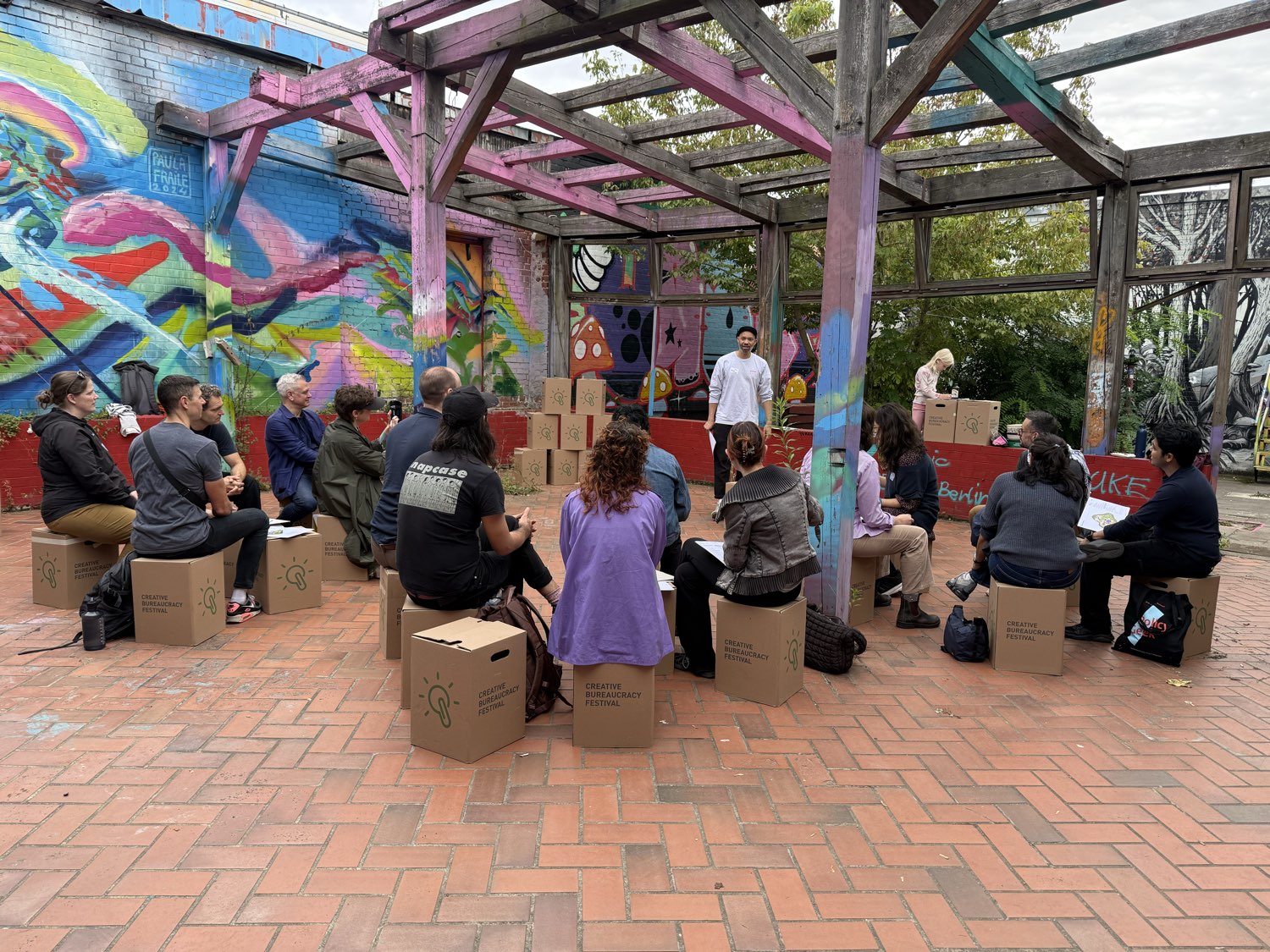
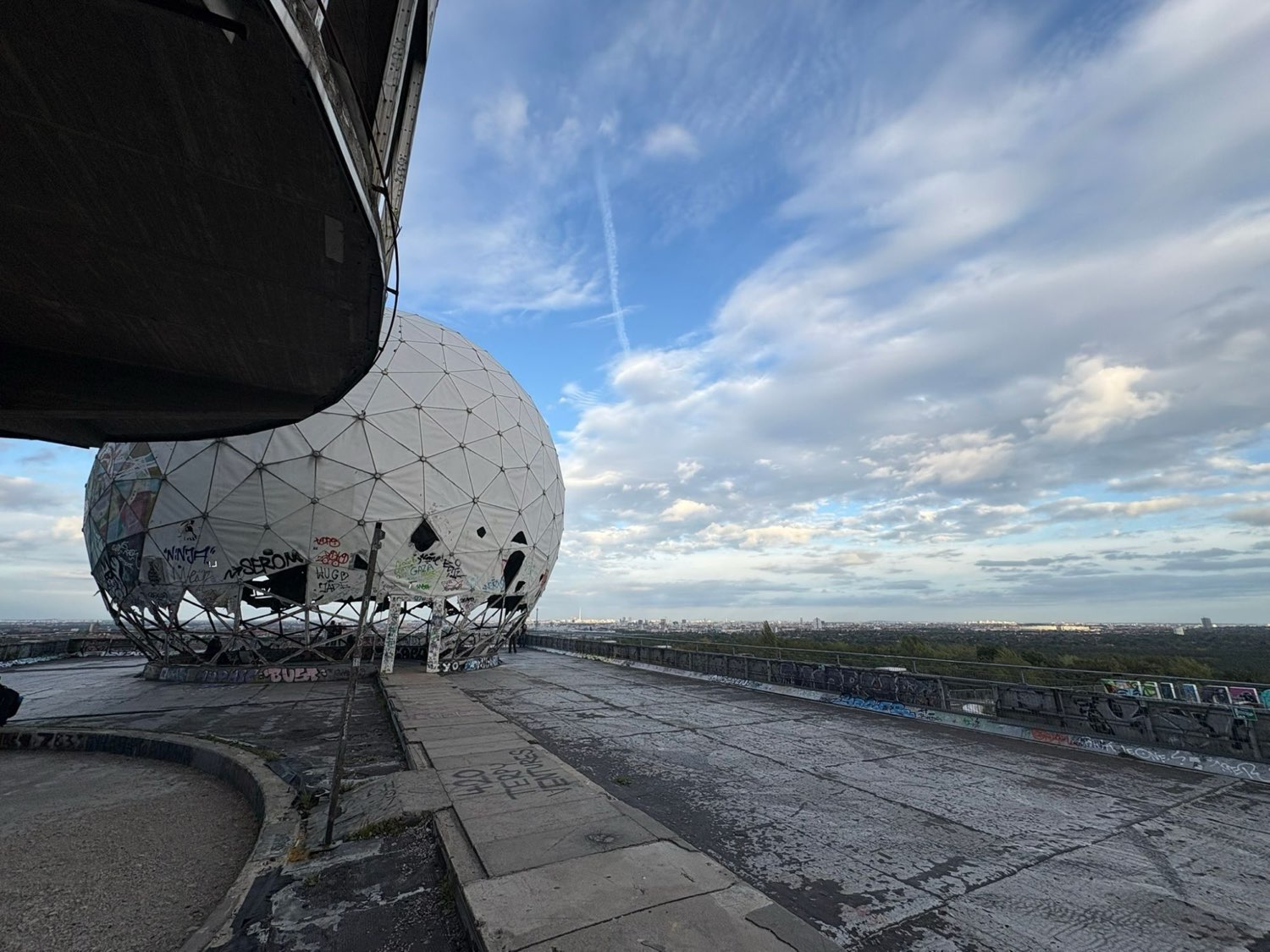
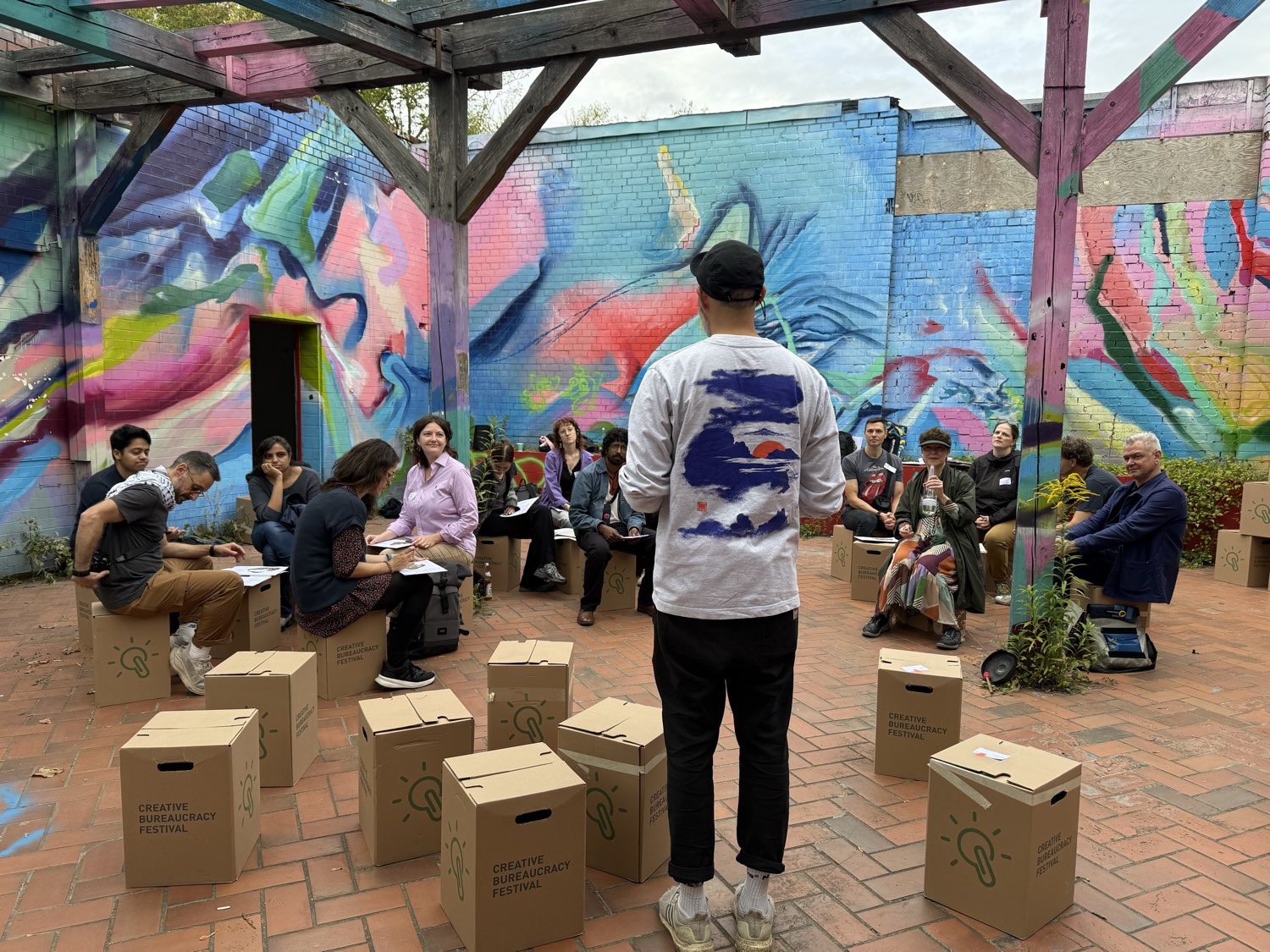
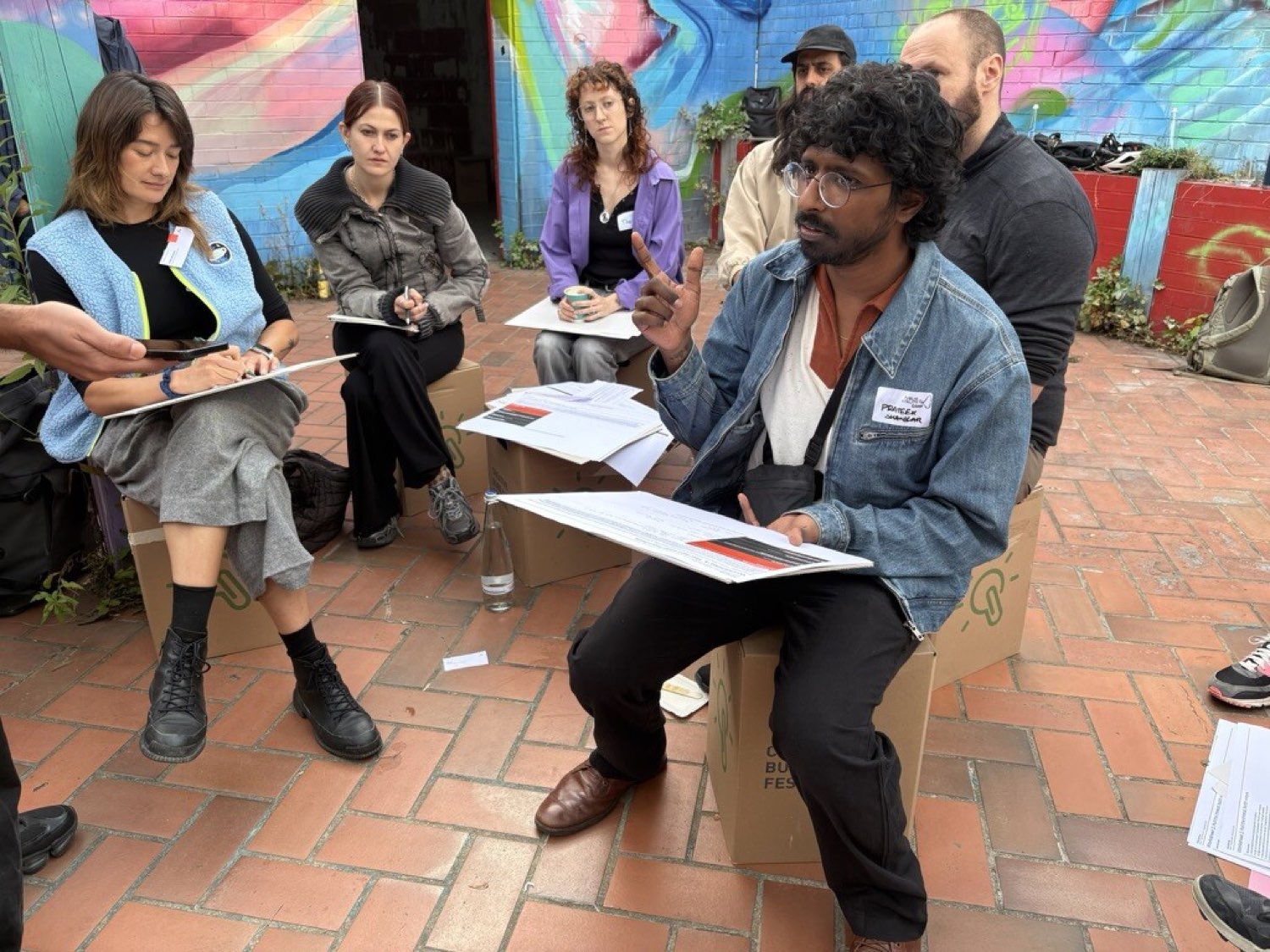
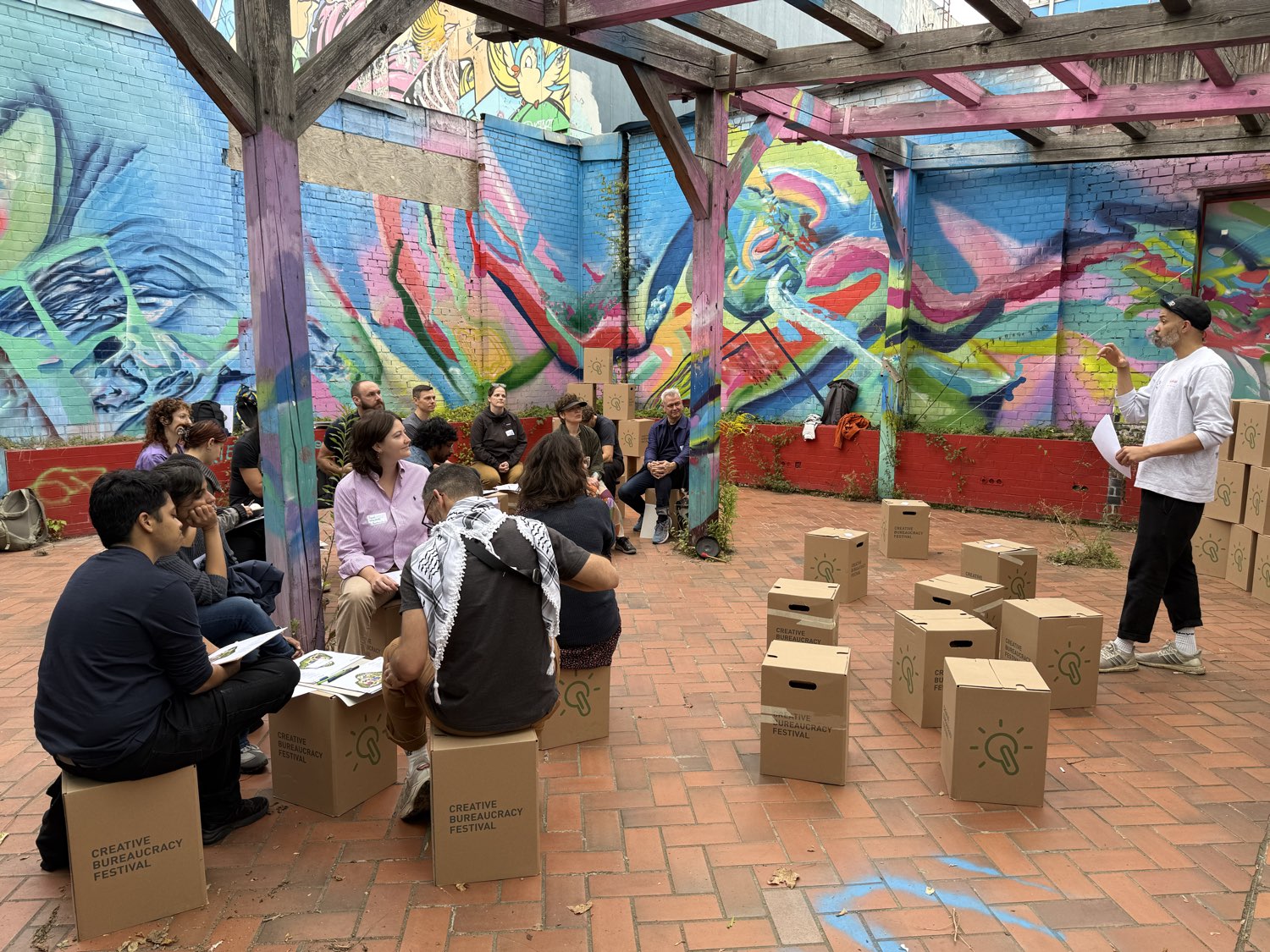
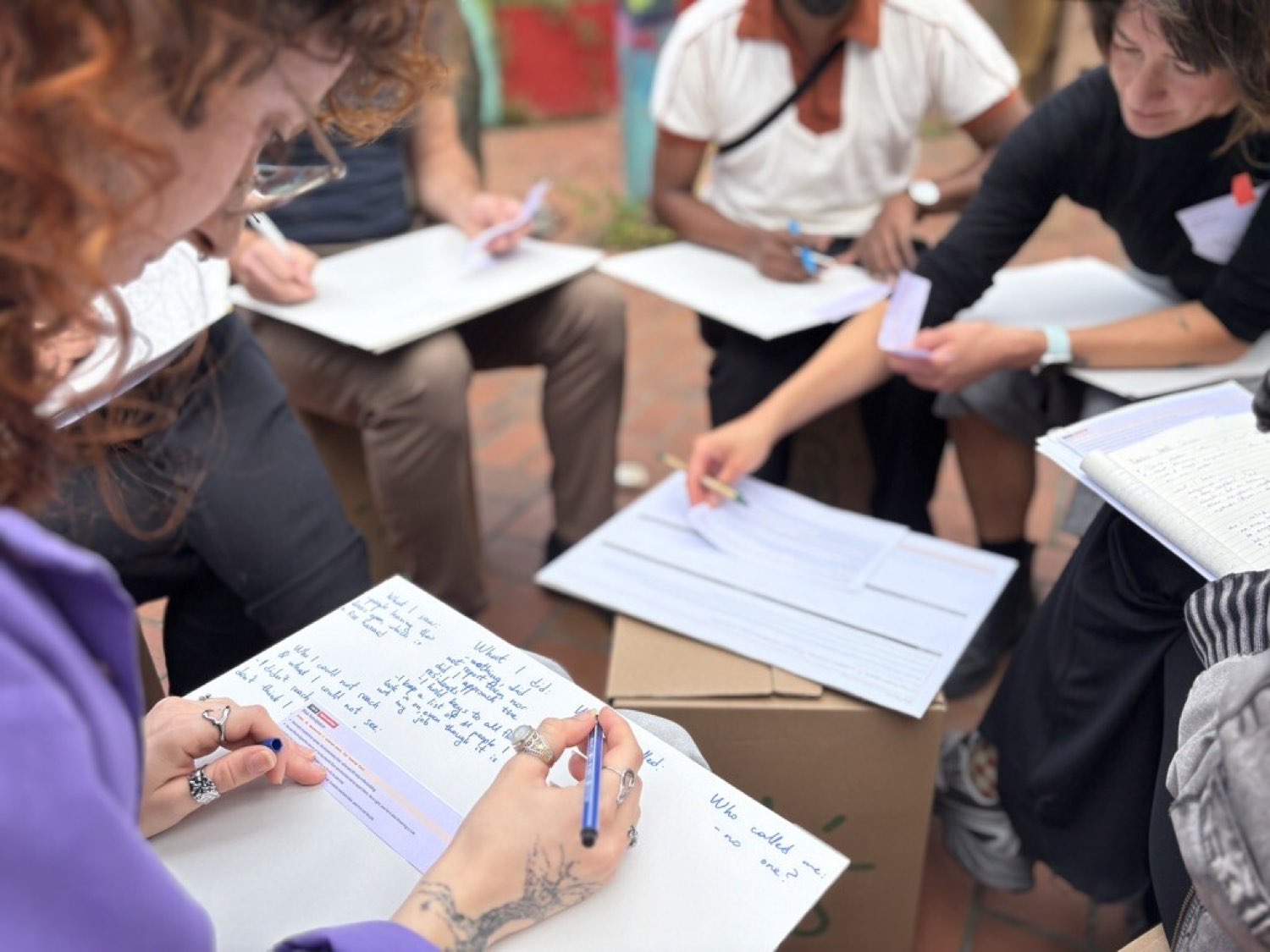
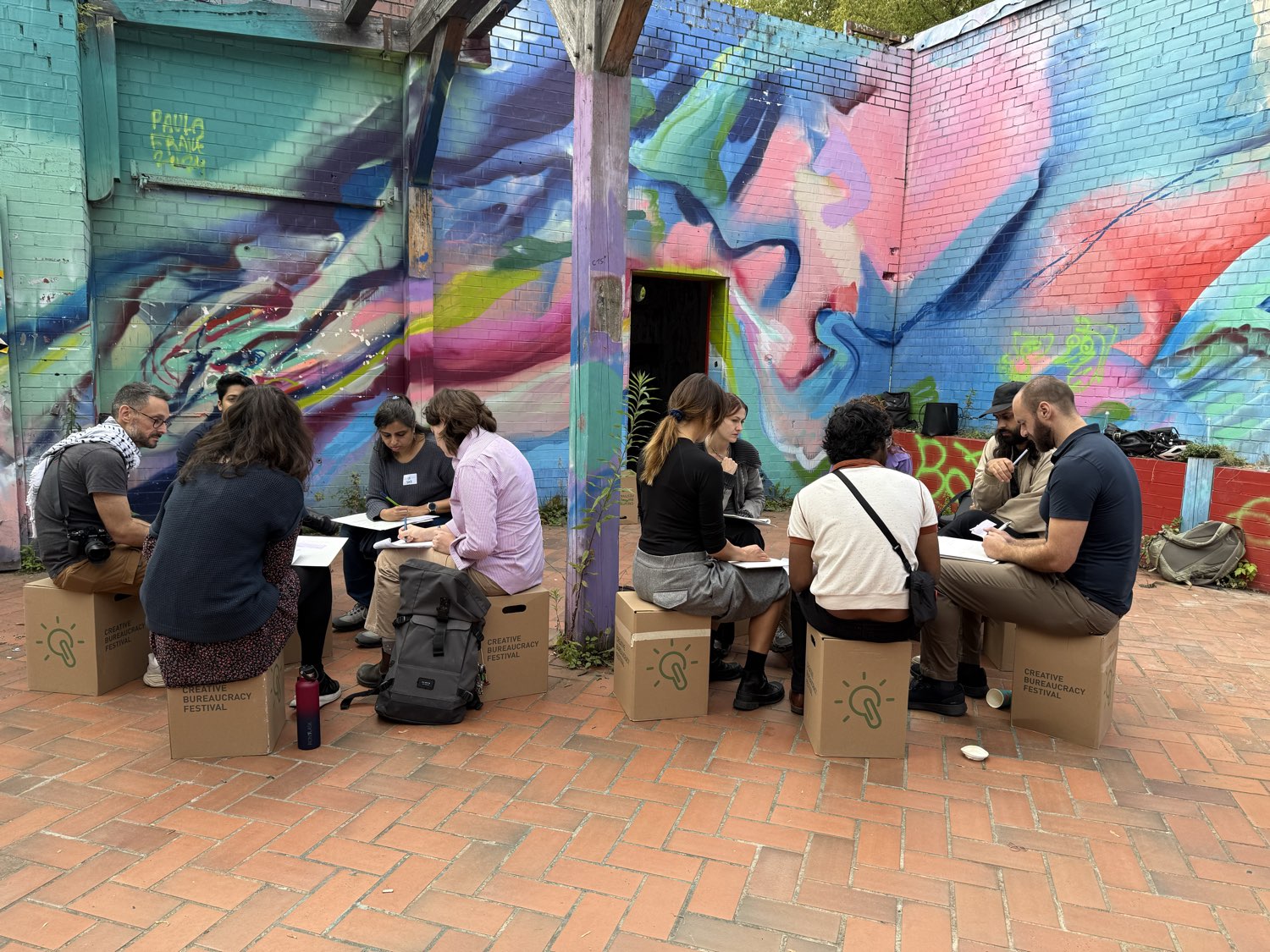
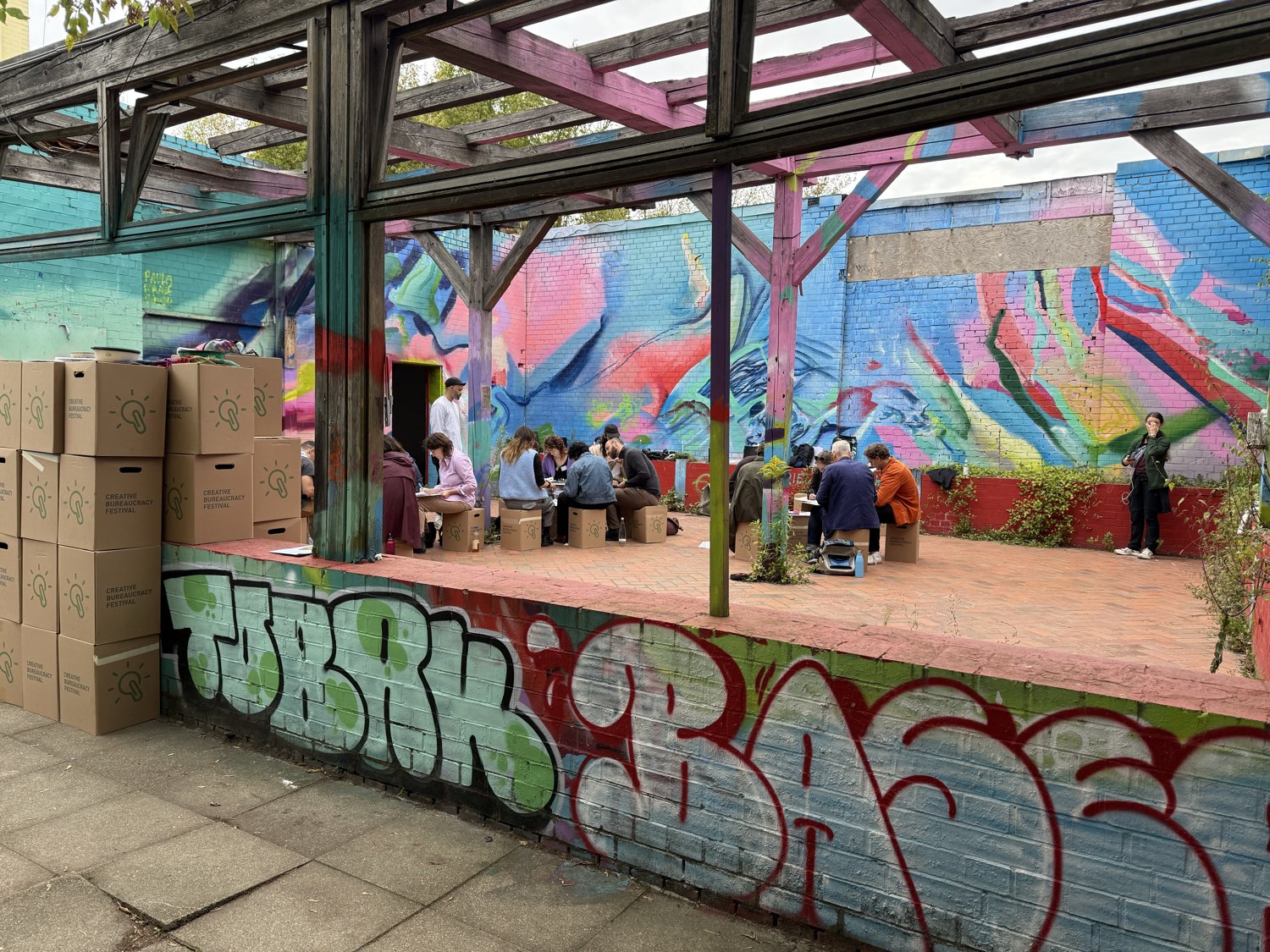
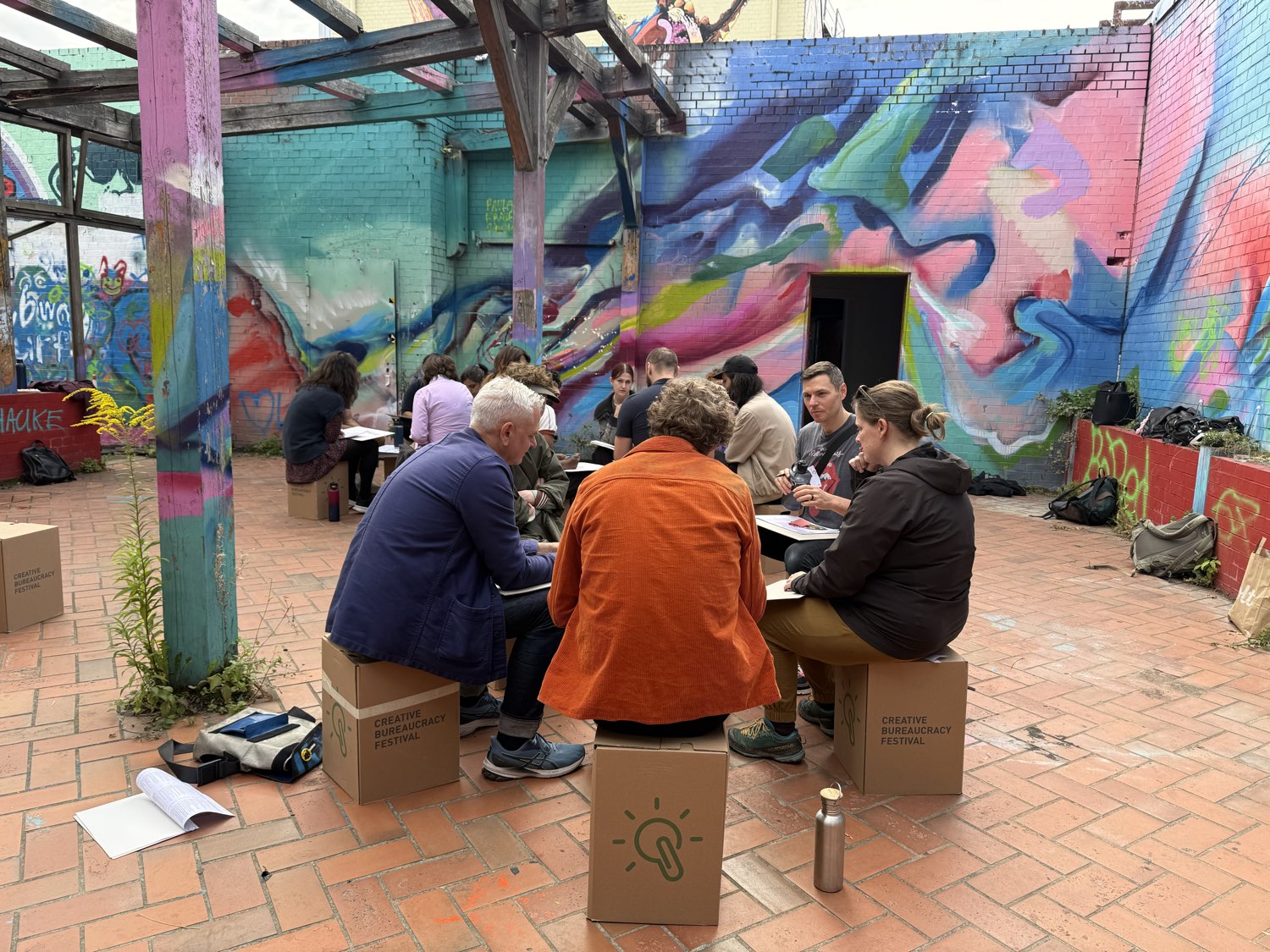
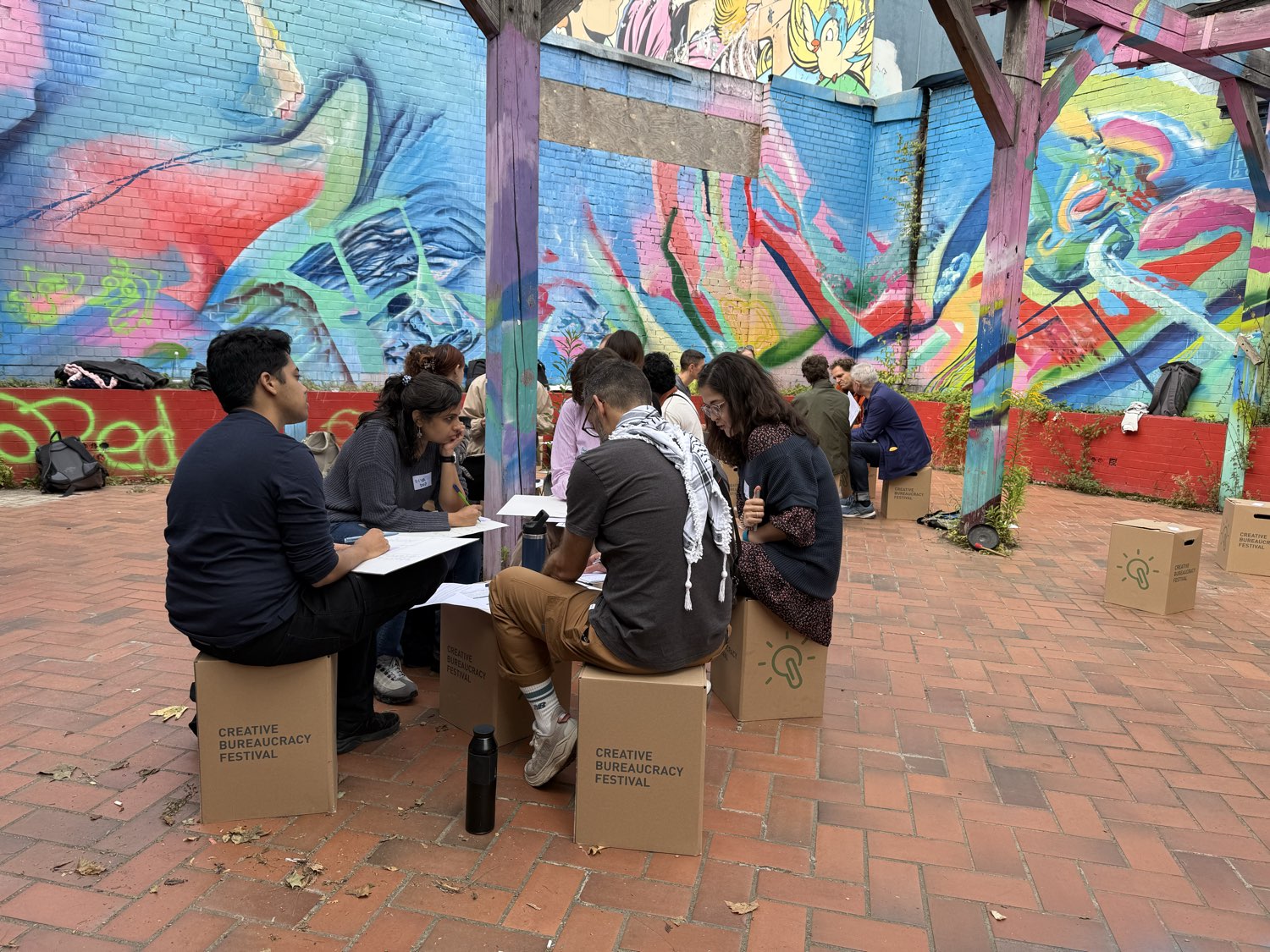
On 19 September 2026, we ran the Berlin Heat Risk Clinic, a three-hour participatory workshop at Teufelsberg as part of the Public Vitality Camp, to identify what it would take to build a city-wide heat resilience strategy for Berlin.
The room held district administration, housing and tenants' organisations, libraries and community spaces, climate and health researchers, emergency and transport staff, foresight and systems people, and residents who spent last June working out how to stay cool in one of the worst heatwaves in recent history. The clinic was hosted roughly three months after Berlin hit 41°C at Tempelhof, the highest temperature in the city's history, and the day before a Berlin election. Across Germany, the Robert Koch Institute estimates around 15,800 heat-related deaths between April and mid-August 2026, with a majority reported to be above 75 years. Most died at home, alone, with limited access to mitigation efforts.
Nineteen years, four hundred flats, forty names.
Four doors propped open on the fourteenth floor.
There is a list in my handwriting.
What I did: nothing.
The ambulance came twice that week.
Marzahn
Background
Berlin is not short of plans. In practice, Berlin already has a heat action plan with seventy measures, as well as a Master Wasserplan and an emerging Chief Resilience Officer role at the state level. But there is limited indication of how the two are meant to work in tandem. The clinic began from a different premise: the shortfall is not plans, mandates or committed people, but the connective tissue between them, what we describe as coordination infrastructure.
We chose urban heat as the entry point into Berlin's systemic riskSystemic RiskRisks that arise from the structure and dynamics of complex systems, often crossing boundaries and scales. field, as it is a concrete, legible threshold that makes an otherwise abstract coordination question tangible.
Outcomes & Synthesis
Portfolio Instruments
These instruments are drawn from the RiskSense portfolio. Except for the clinic method itself, all were used in Berlin for the first time. The portfolio changes with each context it meets.
Template
Risk Clinic
A structured participatory workshop for surfacing how communities navigate systemic risk in real time.
Template
Thread Map
A bidirectional causal map used to trace systemic risk cascades: one failure in the middle, why it happened to the left, what it led to on the right, forking where more than one answer is true and looping where an effect feeds its own cause.
Template
Adjacent Possible Brief
Starting from a resolved future and a known present, name the one next intervention possible from today, then map who holds it, who must be brought along, what it needs and what it opens.
Glossary
Adjacent Possibles
What could exist next, given what exists now. The boundary of possibility at any moment, which expands each time something new is realised inside it.
Civic Signal
An inference drawn from citizen risk intelligence that carries implications for policy, infrastructure, or investment.
Container
A bounded site within the city, held by participants for the length of a clinic so that systemic patterns become observable at a hyperlocal scale.
Coordination Infrastructure
The durable arrangements that let actors who answer to different authorities work together across organisational and sectoral silos. It sits between institutions rather than inside any one of them, and it holds the relationship rather than the people who formed it, so collaboration survives staff turnover, changed mandates, and shifting priorities.
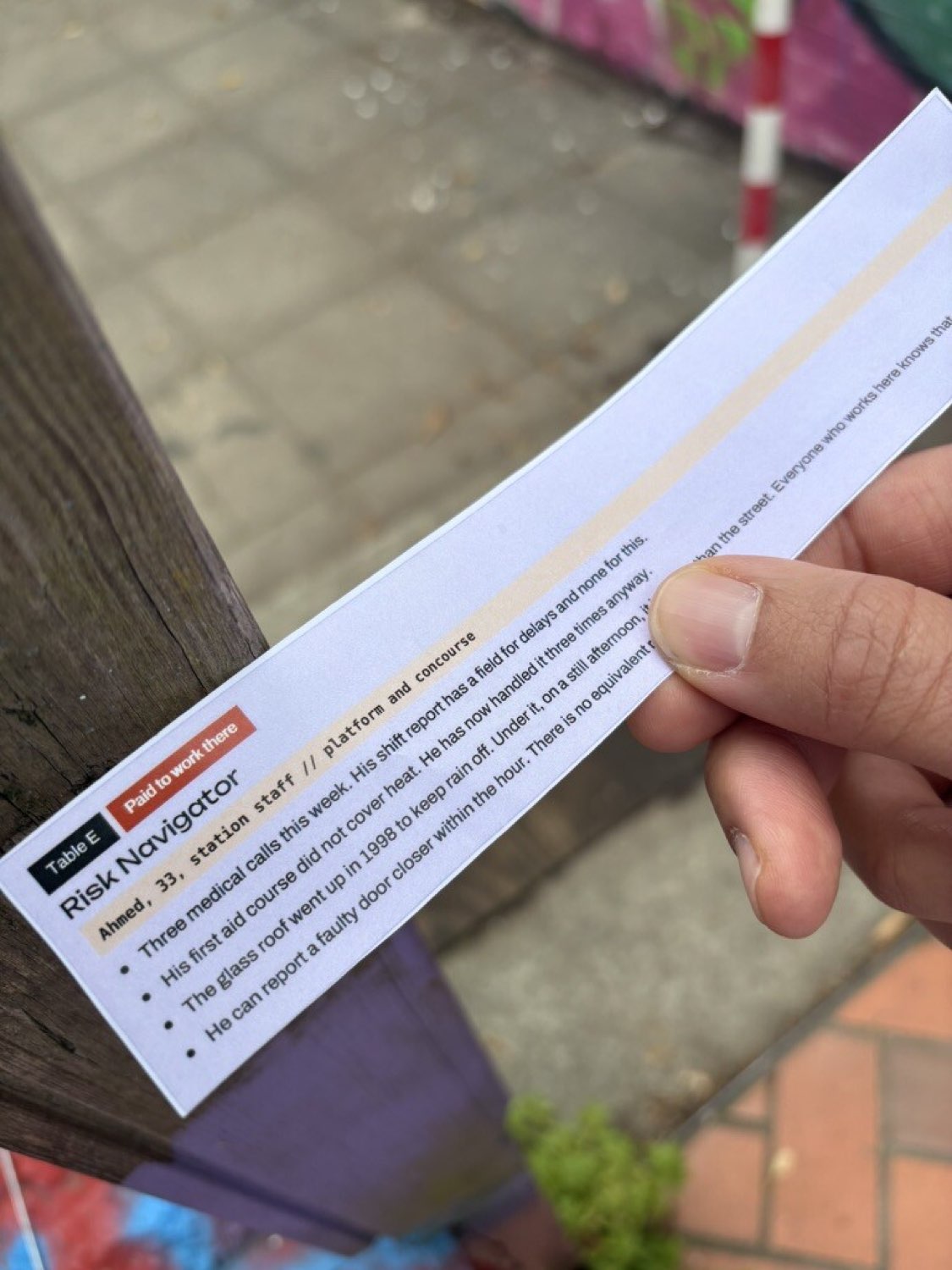
Risk Navigator
A composite persona tracing a distinct systemic risk exposure pathway, to surface the intelligence and signals embedded in how that life is lived. Participants are invited to speak from the positionality of the navigator as a grounding mechanism.
Credits
The Berlin Heat Risk Clinic was convened by Dark Matter Labs with nextlearning e.V. and Medulla, as part of the Public Vitality Camp 2026 at Teufelsberg.
Facilitation and Session Design: Gurden Batra, Prateek Shankar, Simon Höher, Nadim Choucair, Caroline Paulick-Thiel and Tim Lazaroff.
Post-clinic Analysis and Synthesis: Gurden Batra and Prateek Shankar
Visual and Experience Design: Anahat Kaur
With thanks to Siddhi Ashar for her advice and to Alicia Carvajal Rowan, Malik Lakoubay, Sofia Valentini, and Oliver Burgess for their work building city-wide heat resilience in Madrid.


The Risk Field: Revised Hypotheses
The binding constraint is coordination, not a shortage of response i.e. Berlin's heat response is fragmented rather than absent. There are numerous heat response strategies across the city with limited indication of how they are meant to work together, and no clear owner for making them do so.
People and institutions are often willing to act but lack the permission or mandate to do so. For example, libraries tend to stay closed on weekends (despite the hottest days last June falling on a Sunday and Monday) because of fire codes, insurance by-laws, staffing, and unclear rules on whether they are permitted or required to remain open.
Power over adaptation can run opposite to exposure. For example, where flats are owned by people who may not live in them, influence concentrates in actors with little stake in the outcome, while tenants, some in especially precarious situations, have less say.
Berlin is better prepared for extreme cold (e.g. Kältehilfe) than extreme heat, with limited recognition of the continuities between both extremes.
Existing relief is under-used when it is not recognised. For example, some libraries offer respite from heat but may not be official cooling centres, so few residents know they can use them.
Coordination has to outlast the people who build it. Durable arrangements, such as written standing and shared protocols, are more likely to hold than goodwill or pilots, and are best built by staggered implementation and live prototyping.
Explore the Containers
We built the clinic around bounded everyday sites in the city (i.e. containersContainerA bounded site within the city, held by participants for the length of a clinic so that systemic patterns become observable at a hyperlocal scale.) to make the coordination question concrete, at a hyperlocal scale. Groups chose one of three containers: a Plattenbau block in Marzahn, a Kiez library, or an S-Bahn station square. Within it, participants took on the perspectives of different stakeholders, using risk navigatorsRisk NavigatorA composite persona tracing a distinct systemic risk exposure pathway, to surface the intelligence and signals embedded in how that life is lived., to see where gaps and opportunities emerged.
Select a container to see the observations, inferences, and identified adjacent possibles.
A Note on Method: This section is our synthesis of what participants produced during the clinic, using the instruments described above. The patterns, signals, inferences, and analysis drawn from them are our own.
Plattenbau blocks were built from factory-made concrete panels (the word “Platte” means slab or plate) in the 1970s and 80s. Marzahn has one of the largest concentrations of still-inhabited Plattenbauten in Germany. Concrete stores heat during the day and releases it slowly at night, so upper-floor flats in particular can stay hot long after outdoor temperatures drop. Ownership is often mixed, with housing companies, co-operatives, and individual owners sharing one building, which spreads decisions about repairs and retrofits across many parties.
Adjacent possibles
- Map heat risk in housing firstStart with a baseline audit of the stakeholders, policies, regulations, risks, and adaptation already in place across the housing stock.
- Anchor the response in tenants' associationsWork through the Mieterverein and similar organisations residents already turn to, and add the capacity they lack, rather than set up new bodies.
- Add economic expertiseBring in economists to make the financial case for cooling to property owners and their insurers.
- Add legal expertiseBring in lawyers to develop litigation strategies and long-term tenancy rights that protect tenants from heat.