RiskSense is a portfolio of tools that make systemic risks legible and actionable at civic-scale.

We equip citizens with the intelligence to see systemic risks before they cascade, and the agency to shape collective resilience from the ground up.

Explore the portfolio stack →
01Convening Layer

Risk Clinics

Civic deliberation spaces for sensing, planning, acting on, and being accountable to systemic risks.

02Legibility Layer

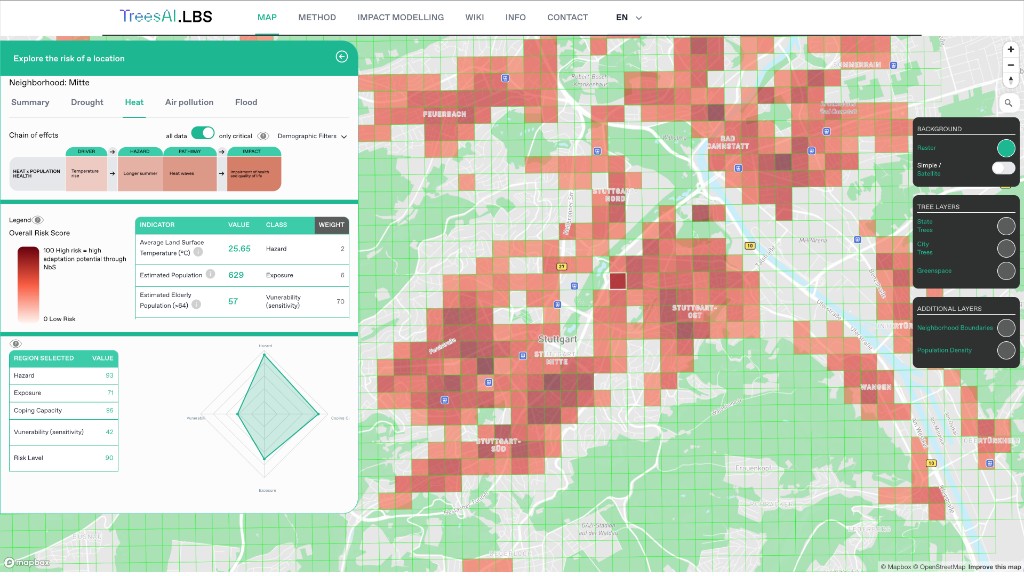
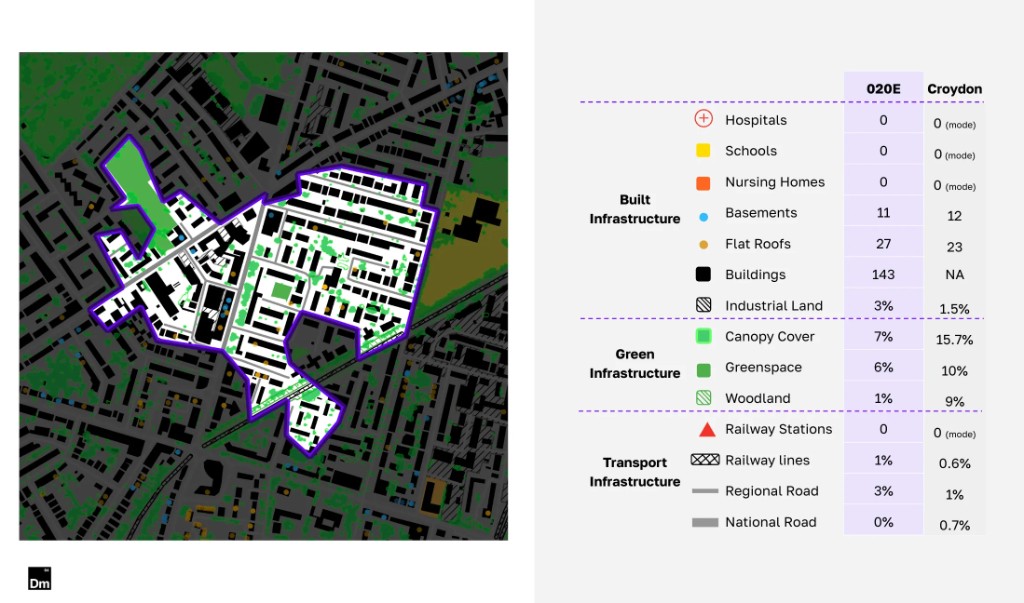
Visualisation & Mapping

, vulnerability cascades, .

03Intelligence Layer

Assessment & Decision-Making

Municipal automation, participatory data, scenario modelling, rehearsal simulations.

04Intervention Layer

Action & Implementation

Adaptation database, planning support, coordination infrastructure.

The RiskSense Portfolio

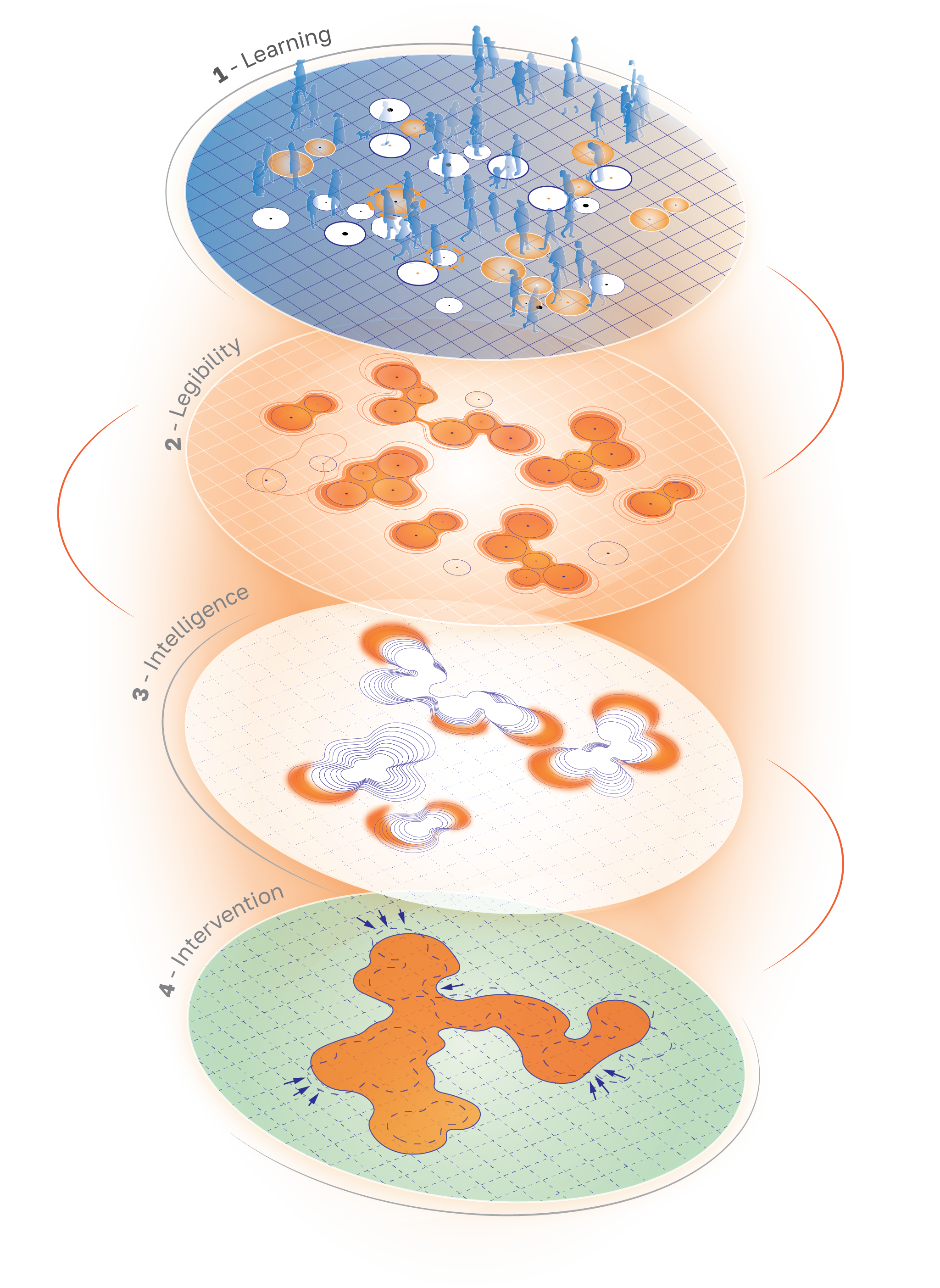
Four integrated layers designed to work together. Risk clinics surface civic-level needs; visualisation tools make systemic risks legible; assessment capabilities provide evidence; implementation infrastructure translates insights into action. Learning is adaptive: insights from each layer feed back in a continuous loop so we stay agile.

Portfolio layers01 / 04 — select a layer to explore

Risk Clinics: Methodology & Typologies

Unlike traditional workshops, Risk Clinics create shared understanding, rehearse responses, surface actionable insights, build relationships, and generate evidentiary pathways that legitimise community knowledge.

Clinic typologies

TypePurposeWhen to use
SensingSurface emerging risks, build collective awareness, identify blind spotsBeginning of adaptation planning, post-crisis sense-making
ActionMove from risk awareness to concrete intervention designTranslating plans into projects, community-led solution development
PlanningIntegrate risk intelligence into formal planningLocal Adaptation Plans, capital budgets, masterplan development
AccountabilityTrack progress, evaluate effectiveness, maintain commitmentAnnual review, grant reporting, political accountability
CoordinationEnable cross-boundary collaboration on shared risksCross-departmental coordination, public-private partnerships

Clinics can be deployed as standalone interventions, as an integrated sequence, or as iterative learning cycles. Typical engagement: Sensing → Planning → Action → Coordination → Implementation → Accountability → repeat.

Currently viewing layer 01 of 04
01

Context: A Crisis of Anticipatory Capacity

We live in an era of polycrisis: overlapping, interacting crises that exceed the capacity of traditional risk management systems. Climate breakdown, infrastructure vulnerability, economic precarity, and social polarisation create that don't respect jurisdictional boundaries, departmental silos, or planning horizons. As economist Ilan Noy notes, climate change has already altered the frequency and severity of extreme weather, rendering historical data an increasingly unreliable guide for actuarial models.

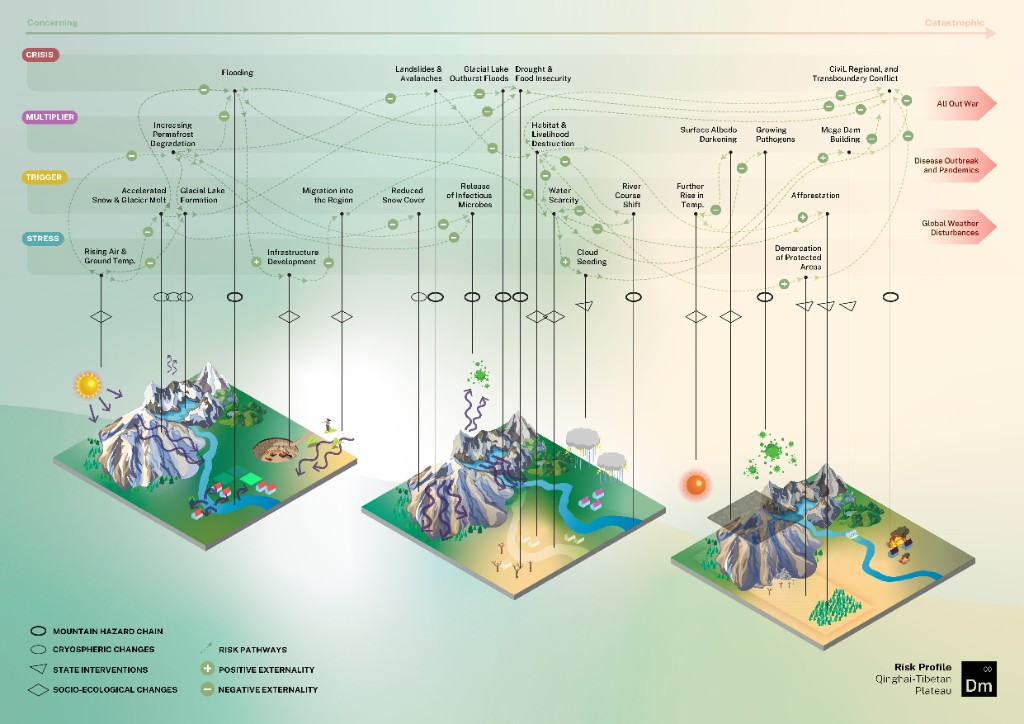
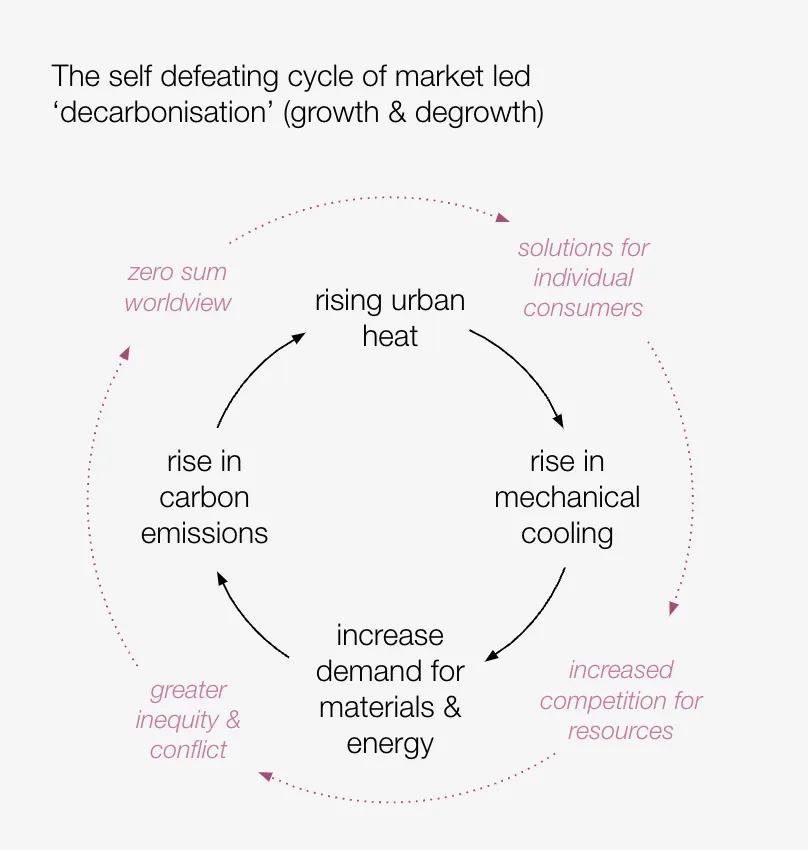
The deeper problem is a lack of visibility and choice. Systemic risks operate through cascades. For example, escalating temperatures during an urban heatwave will likely compound into power outages, water scarcity, transport failure, and care gaps. These cascades remain invisible and normalise a sense of inevitability, social apathy, and distrust in governance. Creating the capacity to identify and respond to these risk cascade patterns—or ‘shapes of risk’—is therefore critical.

Current approaches to risk management operate primarily at two scales:

Institutional/Corporate scale: Sophisticated risk modelling exists for companies, insurance firms, financial institutions, and large government agencies. These systems are expensive, proprietary, and focused on protecting institutional interests. They externalise risk downward: onto municipalities without resources, onto communities without leverage, onto individuals without optionality.

Individual/Consumer scale: Apps and tools provide atomised, reactive information (e.g. flood zone maps, air quality alerts, emergency notifications). These are useful but fragmentary, offering adaptation strategies for those with resources to adapt but little capacity for collective action or systemic response. Risk remains individualised, absorbed as personal responsibility rather than recognised as governance failure.

02

The Missing Middle: Civic-Scale Risk Intelligence

Between these two extremes lies a critical gap: risk governance. This is the scale where:

  • Shared vulnerability (‘’) could become the basis for alignment across difference
  • Collective action becomes possible but isn't yet institutionalised
  • Community organisations, mutual aid networks, and neighbourhood groups operate
  • Local resilience actually gets built through social infrastructure
  • Bottom-up knowledge meets top-down planning (or exposes where planning has failed)

At this scale, there is remarkably little infrastructure for:

  • Sensing emerging risks before they become crises
  • Making systemic risks legible to non-experts
  • Community-led innovation from responses to preparedness
  • Rehearsing responses through structured deliberation
  • Coordinating action across fragmented actors
  • Holding systems accountable to risk reduction commitments

Why now?

Several converging factors: climate adaptation imperative; post-COVID recognition of community-level mutual aid; insurance market breakdown; democratic innovation demand; AI opportunity; and funding availability focused on implementation.

03

Innovation Gaps & Opportunities

Five critical gaps that RiskSense addresses.

Gap 1: Civic Intelligence Infrastructure

Risk intelligence is abundant at institutional and individual scales but absent at the civic scale where collective action happens.

Build infrastructure for distributed risk sensing that creates actionable civic intelligence and capacity to recognise, interpret, and respond to systemic risk cascades, identifying where coupling constrains agency and where communities have already built resilience capabilities.

Applications: Public health infrastructure, civic tech, democratic innovation, community resilience programs

Gap 2: From Rehearsal to Reality

Many tools help visualise or model risks, but few help communities move from risk awareness to coordinated response. The action gap is massive.

Create spaces where people don't just learn about risks but rehearse responses, identify coordination needs, surface resource gaps, and commit to actions. This is the bridge between scenario planning and actual implementation.

Applications: Disaster preparedness, public health emergency response, climate adaptation implementation grants

Gap 3: Compound Risk Legibility

Most risk assessment tools are single-issue. Systemic risks, however, are nested and entangled. There's little tooling for making compound risks legible at civic scale.

Not just mapping individual risks, but showing how they interact, amplify each other, and create vulnerability cascades. Identify zones of low optionality where interdependencies have removed individual agency and only system-level change can restore choices.

Applications: Climate adaptation, urban resilience, critical infrastructure protection, health equity

Gap 4: Anticipatory Governance at Civic Scale

Growing academic and policy interest in anticipatory governance and futures literacy, but most work remains abstract or high-level. Few practical civic tools exist.

Build infrastructure for civic foresight—helping communities develop the muscle to sense emerging risks, deliberate on futures, and take anticipatory action before crises hit. Support risk stewards with tools, legitimacy, and coordination mechanisms.

Applications: Democratic innovation, civic participation, futures/foresight research, urban governance innovation

Gap 5: From Paralysis to Agency

Systemic risks can be overwhelming, leading to paralysis rather than action. Tools often increase awareness without building agency.

Design processes explicitly for agency-building—not just information sharing but helping people identify leverage points, find collaborators who share material vulnerability, and take meaningful action within their sphere of influence.

Applications: Community organising, civic engagement, climate anxiety/action programs, mental health and resilience initiatives

04

Theory of Change

The RiskSense change pathway operates through three reinforcing mechanisms.

  1. sensing and deliberation infrastructure makes and legible.
  2. Legibility enables —creating a new basis for alignment and collective action.
  3. Civic stewardship becomes constitutive—municipalities, insurers, financiers, and policymakers become responsive to civic intelligence.

At each scale, the same dynamic operates: institutions becoming accountable to civic intelligence because communities are the stewards of critical knowledge about systemic behaviour. This is how becomes systemic rather than reactive, and how governance failure becomes legible and addressable rather than normalised and externalised.

Adaptive learning runs through the pathway: each stage informs the next, and outcomes feed back into sensing and deliberation. This loop keeps the system agile and responsive rather than one-off or linear.

Diagram — iterative loop (learning at each stage)
05

How to work with us

Value propositions, use cases, ways to engage, and who we work with—one place. We offer flexible resourcing and partner with the following types of organisations.

Value propositions

RiskSense creates value for multiple stakeholder groups by addressing distinct pain points.

A. Institutional & Financial Innovators

Pain pointWe're designing new institutional architectures for outcomes-based investment, bioregional financing, or resilience accelerators but lack the intelligence infrastructure to identify where capital should flow, what risks to prioritise, and how to demonstrate that interventions are achieving intended outcomes.

  • Structured methodologies to map systemic risk typologies, cascade patterns, and zones of low optionality that financing must address
  • Participatory processes to ground investment priorities in stakeholder lived realities
  • Evidence frameworks that track whether capital is achieving resilience outcomes, distinguish between interventions that create genuine optionality and those that simply externalise risk absorption
  • Coordination mechanisms to align diverse actors (funders, communities, businesses, public agencies) around shared vulnerability and risk commoning
  • Legitimacy through transparent, inclusive processes for setting priorities

B. Local Governments & Municipalities

Pain pointWe have climate plans, risk assessments, and good intentions but struggle to move from analysis to coordinated action. Our departments work in silos, we lack community buy-in, and can't track whether our interventions are actually working.

  • Structured frameworks to translate risk assessments into actionable strategies
  • Participatory processes that build community ownership and political support
  • Coordination mechanisms that break down departmental silos
  • Accountability tools that demonstrate impact to funders and constituents
  • Evidence base for securing climate adaptation and resilience funding

C. Community Organizations & Mutual Aid Networks

Pain pointWe see risks emerging in our communities every day, but lack tools to make these patterns visible, gain legitimacy with decision-makers, or coordinate effective responses across organisations.

  • Methods to document and articulate community-observed risks, surfacing where communities have already built informal adaptation capacities and what critical gaps still exist
  • Platforms to make grassroots intelligence visible to power
  • Coordination infrastructure to align efforts across groups
  • Evidence to advocate for resources and policy changes
  • Capacity to move from reactive crisis response to anticipatory resilience

D. Funders & Investors

Pain pointWe want to fund climate resilience and community preparedness, but struggle to identify high-leverage interventions, assess whether investments are effective, and ensure funding reaches communities most at risk.

  • Transparent frameworks showing how investments translate to risk reduction
  • Evidence of community-driven demand and readiness
  • Mechanisms to track outcomes and hold grantees accountable
  • Models for public-private-community co-investment
  • Portfolio approach that diversifies risk while maximising impact

E. Researchers & Academics

Pain pointWe produce valuable research on systemic risks, but it rarely translates into practical action. We lack real-world testing grounds and struggle to bridge the theory-practice gap.

  • Living labs for testing anticipatory governance methods
  • Rich qualitative & quantitative data on community risk perceptions
  • Partnerships with practitioners for co-research and validation
  • Case studies demonstrating real-world impact of research insights
  • Platform for knowledge exchange between academic and practitioner communities

Use cases & deployment contexts

RiskSense tools support multiple deployment contexts. Each strengthens the same foundational capabilities at different jurisdictional scales.

Swipe or scroll horizontally to explore all use cases

Community-led resilience building

Neighbourhoods facing multiple intersecting risks use Sensing and Action Clinics to design interventions (cooling centres, mutual aid networks); Coordination Clinics align with municipal resources.

Municipal planning informed by civic intelligence

Sensing Clinics surface community-observed vulnerabilities; Planning Clinics translate civic intelligence into actionable strategies; visualisation tools build political will.

Democratic innovation & participatory governance

Sensing Clinics as input to participatory budgeting; Planning Clinics within citizen assemblies; Accountability Clinics evaluate whether participatory decisions achieved intended outcomes.

Cross-jurisdictional coordination

Coordination Clinics align strategies across jurisdictions; shared visualisation creates common operating picture; Planning Clinics identify joint investments.

Sector-specific critical systems resilience

Healthcare, education, utilities—Sensing Clinics surface how cascades work in practice; Action Clinics design sector-specific interventions; Coordination Clinics align sector institutions with community capabilities.

Post-crisis learning & adaptation

Accountability Clinics evaluate what worked; Sensing Clinics identify emerging patterns; Action Clinics rapidly redesign improved responses.

Capital allocation grounded in shared vulnerabilities

Sensing Clinics map risk landscape; visualisation shows cascades; Coordination Clinics align bioregional actors; Planning Clinics translate civic intelligence into investment criteria.

Insurance markets & risk transfer

Sensing Clinics document informal adaptation capacities; visualisation makes community stewardship legible to insurers; Accountability Clinics track loss reduction over time.

Resilience prioritisation for outcome accelerators

Sensing Clinics surface interdependencies; visualisation maps intervention interactions; Action Clinics test hypotheses; Accountability Clinics track resilience outcomes.

Resourcing & partners

Multiple revenue streams support pilots, scale-up, and ecosystem building. We are seeking active participation and collaboration from the following types of partners.

Resourcing model

Training & capacity building

£200–£1,000/participant

Municipal contracts

£50,000–£150,000 per engagement

Grant-funded pilots

£100,000–£500,000 for 12–18 month pilot

Platform licensing (SaaS)

£10,000–£50,000/year per municipality

Democratic governance & civic infrastructure

Variable

Policy advisory & evidence synthesis

Variable

Public-private partnerships

£50,000–£300,000; retainers £80,000–£250,000/year

Partners we work with

+
Municipal networks

Dissemination channels, national associations, regional development agencies

+
Research institutions

Universities with urban planning/resilience programs; think tanks focused on governance innovation

+
Funding bodies

Climate funds; foundations & philanthropies; government innovation funds

+
Technology partners

GIS platforms (ESRI, MapBox); civic tech organisations; companies interested in social impact

+
Community organisations

Neighbourhood associations; mutual aid networks; environmental justice organisations

Building futures, together.

Get in touch

For more information or to explore partnership opportunities:

risksense@darkmatterlabs.org

RiskSense is a project of Dark Matter Labs. Draft Report v0.2 — February 2026.